A deck’s surface gets the attention. Its frame determines what that surface rests on.
Proper Built offers TimberTech aluminum deck framing in Portland, OR, as an option for Oregon homeowners planning a new deck or a full rebuild. Instead of conventional lumber beneath the deck boards, the system uses engineered aluminum structural components. It gives homeowners a way to address wood rot and framing movement where repairs could be difficult later.
Aluminum is not the right choice for every deck. A well-built wood frame remains a sound option, usually at a lower initial cost. The decision comes down to whether aluminum’s resistance to wood decay, consistent dimensions, and design options matter enough on your project to justify the difference.
Why the Frame Beneath Your Deck Matters

A deck frame supports the boards, stairs, railing, furniture, and people above it. Once the deck is finished, much of that structure is hidden. If it needs repair, you may have to remove material that still looks good to reach it.
Pressure-treated lumber is a proven framing choice. Proper design and installation matter far more than a simple claim that one material is “good” and another is “bad.” Wood, however, absorbs and releases moisture. Individual pieces can shrink, bow, or twist, and decay can develop when conditions allow.
That difference matters most when you expect the finished decking to serve for many years. Before choosing boards and railing, ask what you want beneath them.
What Is TimberTech Aluminum Deck Framing?
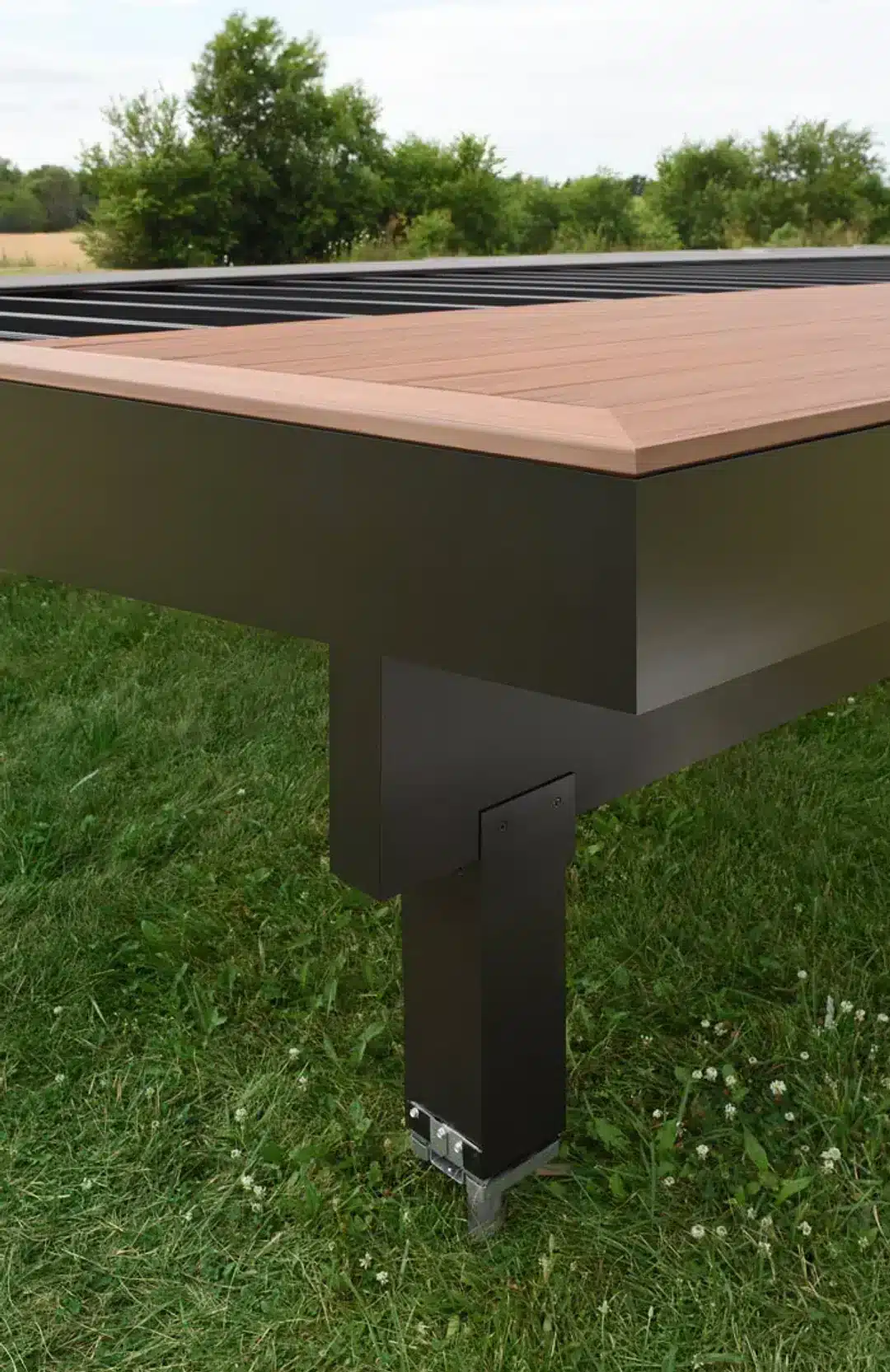
TimberTech Aluminum Framing is an engineered deck substructure. Its system includes joists, beams, posts, ledgers, connections, and stair components designed to work together beneath composite or PVC decking.
The joists support the deck boards. Beams and posts carry loads toward the foundation. A ledger, where the design calls for one, forms part of the connection to the house. Those parts still require a suitable layout, footings, attachments, and installation. Choosing aluminum changes the framing material; it does not remove the need to design the structure for the property.
Why TimberTech Aluminum Framing Makes Sense in Portland
Portland’s rainy months make water management part of nearly every deck decision. A shaded yard or an area beneath a deck may dry slowly after rain. The frame is one place where material choice can reduce a specific concern: aluminum framing members do not develop wood rot.
That advantage has limits. The deck still needs sound flashing, drainage, compatible fasteners, and appropriate connections. If those details are poorly planned, water can still affect the house, footings, decking, or space below.
Consider aluminum framing when you want premium decking over a structure that will not absorb water like lumber. It is especially relevant when the frame will be hard to access, exposed to view, or part of a larger plan for the yard beneath an elevated deck. TimberTech describes the system as highly resistant to moisture-related damage.
No Wood Rot Hidden Beneath Your Deck
The simplest reason to consider aluminum is also the easiest to overlook: the aluminum components cannot develop wood rot.
On a wood-framed deck, the condition of the structure is not always obvious from the boards above it. Connections, covered areas, and places where moisture lingers deserve attention during a replacement assessment. New surface boards do not fix deteriorated framing underneath.
Aluminum removes the risk of wood decay from the components it replaces. It does not guarantee that every part of a deck will last indefinitely, and it does not correct an unsuitable foundation or attachment. The value is narrower and more useful than a blanket promise: one important hidden part of the deck is no longer made of wood.
A Flatter Frame Can Create a Better-Looking Deck
Deck boards follow the structure supporting them. When framing varies in height or shape, long rows of finished boards can reveal that variation.
Skilled builders account for differences in lumber, but lumber is a natural product. TimberTech manufactures its aluminum components to consistent dimensions and says the assembled frame starts very flat and stays flat when installed according to its guidelines. That can be valuable when a deck design includes long sightlines, borders, or detailed board patterns.
A flat frame does not make poor installation invisible. Board layout, spacing, fastening, and transitions still matter. It gives the builder a consistent starting point for the finish you will see every day.
Built for TimberTech Composite and Advanced PVC Decking
TimberTech states that its Aluminum Framing system is compatible with every TimberTech decking and railing collection. Homeowners considering TimberTech Composite or Advanced PVC can therefore plan the boards, railing, stairs, and frame as related choices.
That does not mean TimberTech decking requires an aluminum frame. Proper Built can also discuss a suitable wood-framed option. The case for aluminum becomes stronger when you are already making a substantial investment in the visible deck and want the hidden structure to address some of the same long-term concerns.
TimberTech Aluminum Framing vs. Wood Framing
Both materials can support a well-designed deck. The practical differences are what each material asks you to accept.
| Consideration | TimberTech Aluminum Framing | Pressure-Treated Wood Framing |
|---|---|---|
| Wood rot | Aluminum components do not develop it | Decay can occur when conditions allow |
| Moisture | Aluminum does not absorb water like lumber | Wood absorbs and releases moisture |
| Insects | Aluminum is not food for wood-damaging insects | Wood can be vulnerable to insect damage |
| Dimensional consistency | Manufactured to consistent profiles | Pieces naturally vary and can move over time |
| Finished surface | Provides a consistent starting point | May need more adjustment during construction |
| Initial cost | Generally higher | Generally lower |
| Best fit | Homeowners who value these structural benefits enough to pay more upfront | Homeowners who prioritize a proven, lower-cost framing option |
This is not a comparison between a good deck and a bad one. Proper Built should assess the design, site, decking choice, and budget before recommending either frame. TimberTech itself notes that aluminum framing often costs more than wood.
Is TimberTech Aluminum Framing Worth the Extra Cost?
Sometimes, but not automatically.
Aluminum framing deserves a closer look if you are building an elevated deck, paying for premium decking, planning detailed board work, or expecting the underside to remain visible. It may also appeal to you if reducing the chance of hidden wood decay matters more than minimizing the initial framing cost.
The tradeoff is straightforward: you spend more on the structure at the start. The benefit is not a guaranteed financial return or a promise that the deck will never need attention. It is a frame with different material properties and, potentially, a different range of design options.
If your budget is better spent on the deck’s size, access, or another feature, a properly designed wood frame may be the sensible choice. Ask Proper Built to compare the options against the actual scope rather than treating aluminum as a required upgrade.
A Good Fit for Elevated and Second-Story Decks
An elevated deck makes the framing decision more visible. From the yard, you may see its beams, posts, and underside. You may also use the area below as part of the project rather than leaving it as leftover space.
That makes it useful to plan several questions together: Where should the stairs meet the yard? Which post positions leave room to move underneath? Will the underside remain open, or do you want a separate under-deck dry-space system?
TimberTech Aluminum Framing can be considered for this kind of project, but the material alone will not keep the space below dry. Proper Built also offers underdeck dry-space work. If selected, that system serves a different purpose than the frame.
Does TimberTech Aluminum Framing Rust?
Aluminum does not form the familiar iron-based rust associated with ordinary steel. TimberTech describes its framing as highly resistant to moisture-related damage, including corrosion.
That does not mean you can use any hardware with it. TimberTech specifies compatible fasteners and installation details for its system. Its warranty warns that unsuitable fasteners can contribute to galvanic corrosion and invalidate coverage. The frame should be planned and assembled as the manufacturer’s system, not as an assortment of interchangeable metal parts.
Can an Existing Wood Deck Be Rebuilt With TimberTech Aluminum Framing?
A full deck replacement is a natural time to consider a different frame. Once the old boards come off, it’s easier to assess the condition of the joists, connections, and supporting structure.
If the frame is sound and the layout still works, resurfacing may be enough. If the structure is deteriorated, or you want to change the deck’s footprint, stairs, or space underneath, a rebuild lets you reconsider the framing with the rest of the design.
Do not assume existing footings or attachments can be reused with a new aluminum frame. Proper Built can assess what should remain and what the new deck requires. That is a more reliable starting point than choosing new boards before knowing what they will sit on.
Why Proper Built for TimberTech Aluminum Framing?
A framing decision affects choices Proper Built already helps homeowners make: decking, stairs, railing, deck remodeling, and the use of space below an elevated deck.
Proper Built is a TimberTech Pro Platinum installer offering timbertech aluminum framing installation in Portland, OR. It has also received a TimberTech award for a deck built with TimberTech decking in the under-$50,000 category. Those are meaningful company credentials, but they should not be mistaken for a claim that the award-winning deck used aluminum framing.
The useful conversation starts with your property. If aluminum could reduce a concern or improve the proposed layout, Proper Built can explain where that benefit applies. If a wood frame better serves the project and budget, that should be clear, too.
Build the Deck Beneath the Deck
You will see the boards every day. You may rarely see the frame, but it shapes the deck’s finished surface, its support layout, and what you can do beneath an elevated design.
TimberTech Aluminum Framing gives you an alternative to conventional wood framing, with real benefits and a higher initial cost. Proper Built can help you compare both approaches for your Portland home, then plan the structure alongside the decking, stairs, railing, and rest of the space.
Talk with Proper Built about the deck you want to build and whether an aluminium deck frame in Portland, OR, belongs beneath it.